Cold open
0:00Late January, 2026. Kyiv. A drone comes in low over the government quarter. So low that people on the seventh floor of the Cabinet of Ministers watch it slide past their windows.1
One official told The Atlantic that people ran through the corridors, asking each other what on earth that was.1
It was Russian. And it wasn’t being flown by radio, which Ukraine knows how to jam. It was talking to space. Through an American satellite network. The same network Ukraine’s own army runs on.1
Within a week, Ukraine would do something that sounds impossible. It would switch off the internet for the enemy, in the middle of a war, without switching it off for itself. It would do it with a list. And when Russia tried to sneak onto that list, the list became a trap.
1 · Now Active
0:59That list only makes sense once you know how Ukraine came to depend on Starlink at all. The story starts four years earlier, with a tweet.
The twenty-sixth of February, 2022. Two days into Russia’s full-scale invasion, missiles are hitting Ukraine’s power lines and phone towers. Ukraine’s minister for digital transformation, a 31-year-old called Mykhailo Fedorov, tags Elon Musk on Twitter.
While you try to colonize Mars, he writes, Russia try to occupy Ukraine. He asks for Starlink.2
Starlink is SpaceX’s internet from space. Thousands of small satellites circle a few hundred kilometres up. On the ground you need one thing: a dish the size of a pizza box, called a terminal. It talks to whichever satellite is overhead. There are no cables and no towers, nothing on the ground for a missile to hit.
Hours later, Musk replies. Starlink service is now active in Ukraine. More terminals en route.3
Within days the first terminals arrive.4 Within months they’re everywhere: in hospitals, in trenches, bolted to the roofs of pickup trucks. Ukraine builds a whole way of fighting on them: drone video, artillery targeting, the message from one position to the next.
It was the cheapest, fastest military network anyone had ever fielded. It came with one condition nobody said out loud. The kill switch wasn’t in Kyiv. It was in California.
2 · The Edge of the Map
2:39In September 2022, a Ukrainian sea drone, an explosive boat with no one aboard, washed up near Sevastopol, home of Russia’s Black Sea Fleet. It carried a Starlink terminal, and near Crimea, Starlink didn’t work. SpaceX had never switched coverage on there. Musk later said doing so would have made the company complicit in a major act of war.4,5
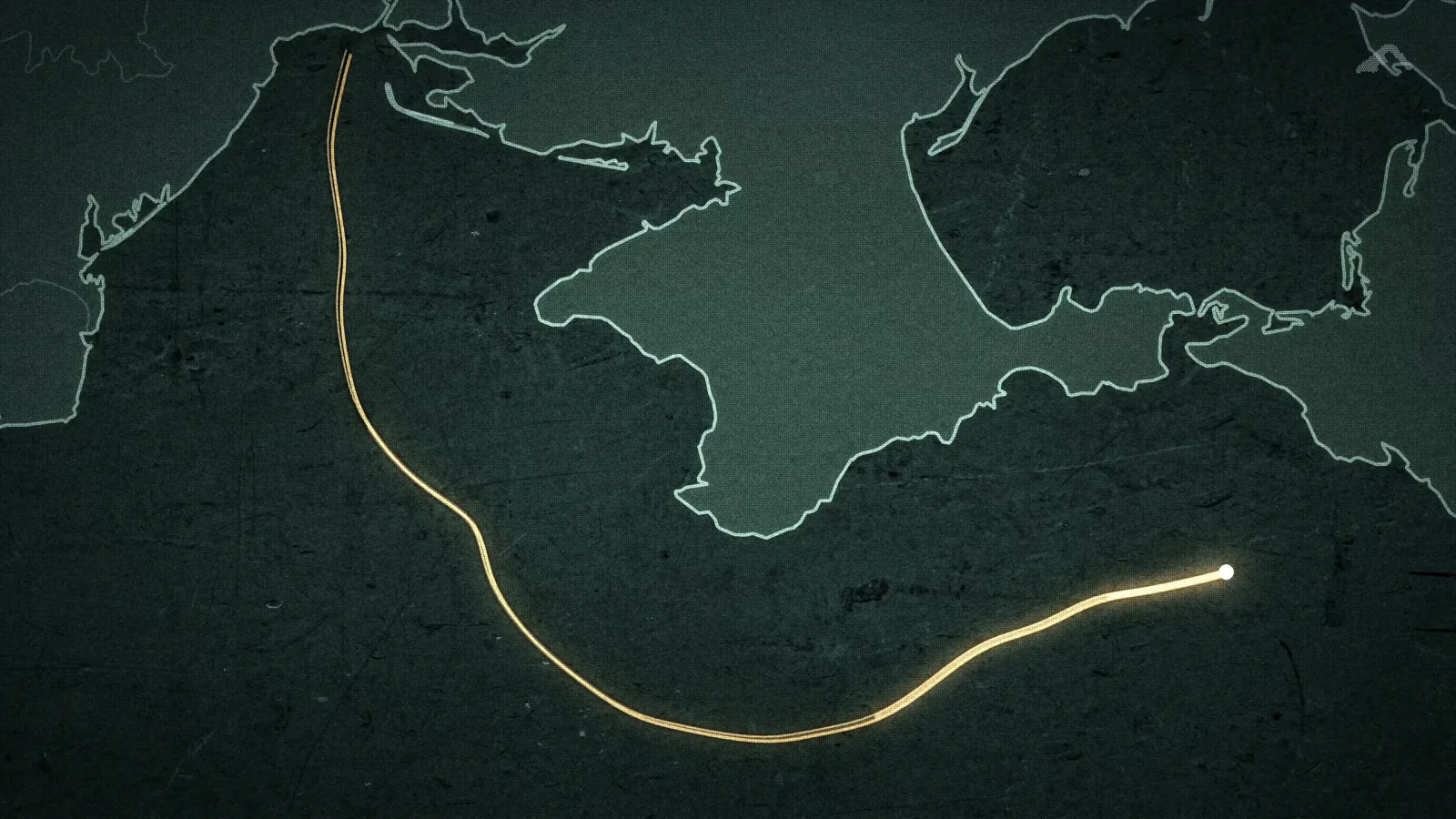
Set aside who was right. A European war now had a border, drawn by a private company. And that wasn’t even the biggest problem Starlink would bring to this war.
3 · The Enemy’s Dish
3:19The second problem took longer to see. A Starlink terminal doesn’t know whose side it’s on.
SpaceX says it does not sell terminals to Russia, and Starlink isn’t offered there. But dishes travel. Reporters traced Russian terminals bought through Dubai and middlemen, then carried to the front.4
That matters because of how this war is fought. Most drones are flown by radio, or find their way by GPS. Both can be jammed. Blast enough noise on the right frequency and the drone goes deaf. Both armies have become very good at it.
A drone with a Starlink dish is different. It doesn’t listen to the ground. It talks upward, to a satellite, and that link is far harder to drown out. An operator hundreds of kilometres away can fly it live: low, under the radar, around the jamming.6
In January, Ukraine got a new defence minister, the youngest it has ever had: Mykhailo Fedorov.7 One of his first warnings: Starlink was now flying on four types of Russian drone, the Shahed, the Gerbera, the BM-35 and the Molniya.8
On the twenty-seventh of January, Russian drones hit a passenger train in the Kharkiv region. Six people were killed.9 A well-known Ukrainian radio expert said the drone had been flown through Starlink.6 Officials never confirmed it.
Days later came the drone past the seventh floor.
4 · The Guest List
4:52So here was the problem, put plainly. Ukraine needed Starlink more than ever. Russia was using the same Starlink to kill Ukrainians. The dishes were identical. The satellites were the same satellites. How do you switch off the enemy’s internet without switching off your own?
The first try was a speed limit. By the end of January, terminals moving faster than about 90 kilometres an hour lost their signal.6 A dish on a truck could keep working. A dish on a drone at attack speed could not.
It helped. It wasn’t enough. So Fedorov’s team proposed something blunter. Stop trying to find the bad dishes. Decide which ones are good, and switch off everything else.
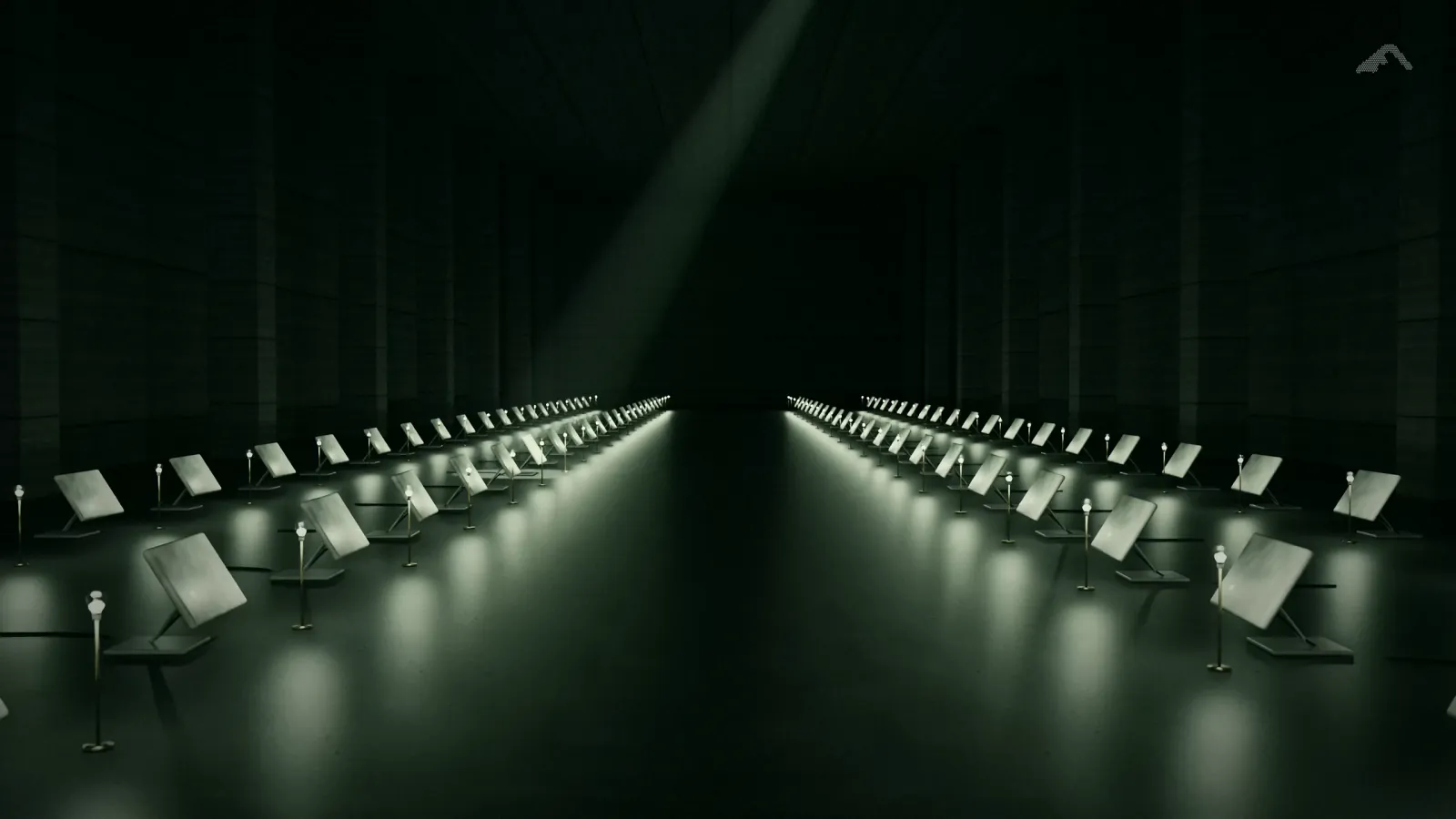
Engineers have names for these two ideas. A blacklist says: everyone is allowed in, except the names on this list. A whitelist says: no one is allowed in, except the names on this list. One starts from trust. The other makes you earn it. Ukraine was about to move a whole country’s war from the first kind to the second.
According to a source who spoke to The Atlantic, SpaceX built the software for it in about a day.1
On the first of February, Musk posted that the steps had worked, and asked to be told if more was needed.10 The next day, Ukraine’s government made it official. Every Starlink terminal in the country would have to be registered.11,12
Soldiers registered through the army’s battlefield software, Delta. Companies, through the government app, Diia. Civilians, at a service centre, with a passport. Every dish had a number. Approved numbers went on the list. The list went to SpaceX.11
And if your dish wasn’t on it? Starlink’s own help page put it in one line. No service in Ukraine. Your account, it added, would continue to be billed.13
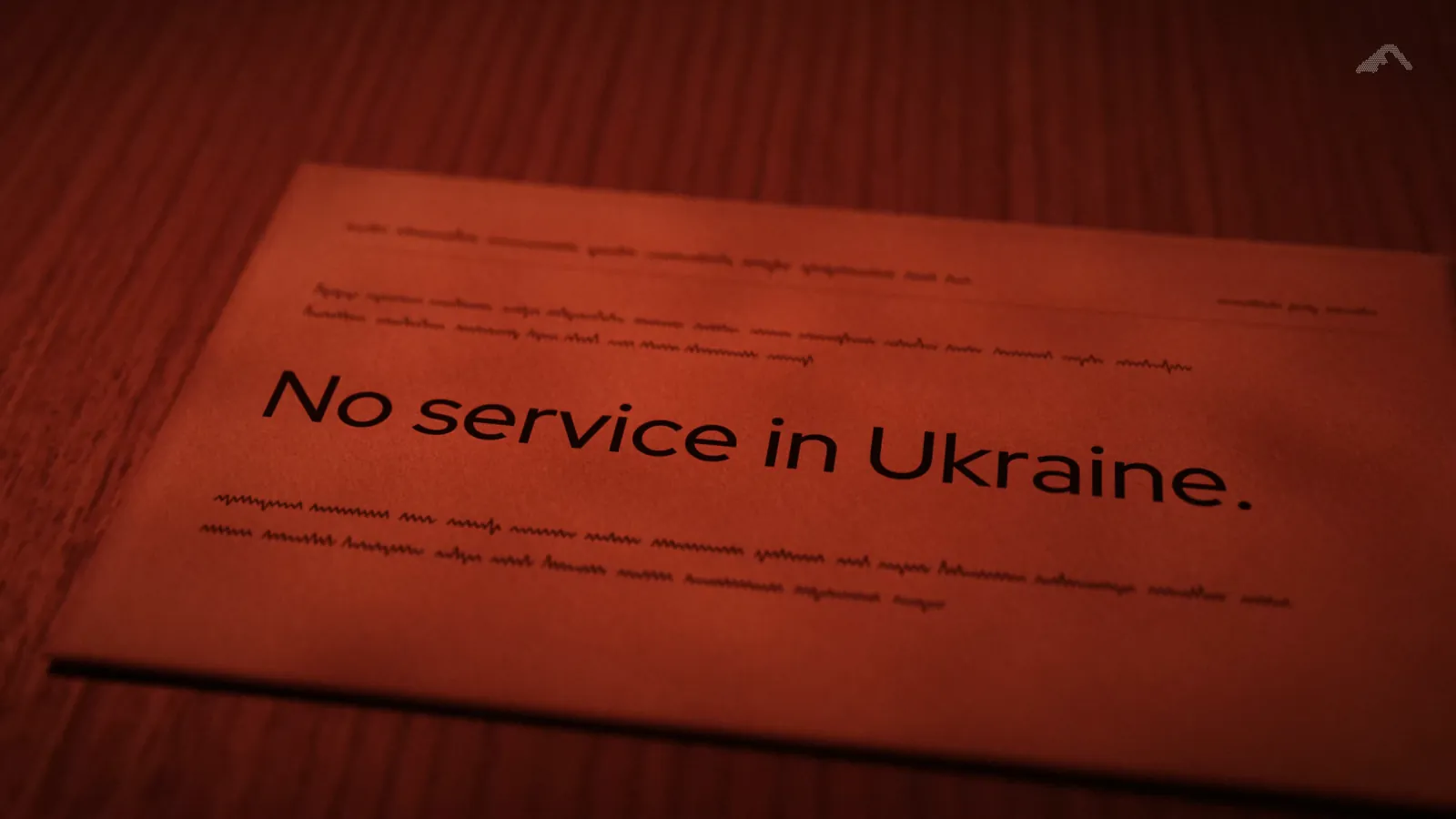
What happened next is hard to measure, and each side tells it differently. Ukraine’s General Staff says Russian assaults fell from 338 on the first of February to under 200 a day. An elite Russian drone unit, Rubikon, stopped posting its deep-strike videos. A pro-war blogger wrote that drone control had rolled back to 2022. Russia’s deputy defence minister said nothing had changed.6
It cost Ukraine something too. Some of its own units lost their connection while the list caught up. But the list’s real weakness wasn’t technical. It was human.
5 · Getting on the List
7:30Every list creates a new kind of power. The power to get on it.
Russia couldn’t register its dishes. Ukrainians could. Russian recruiters began paying Ukrainians, people Ukrainian officials call drops, to register terminals in their own names and hand them over. Ukraine’s office for prisoners of war said families of captured soldiers were being blackmailed into doing it. One Russian drone channel boasted of 200 successful registrations.6
So the list had moved the war somewhere new. Not to the front line. To the paperwork.
And then a Ukrainian unit did something elegant. The 256th Cyber Assault Division set up Telegram channels and bots offering Russian soldiers exactly what they wanted. A way onto the list. For a fee.14
To register, of course, you had to say which terminal you had. And where it was.
The division says Russian troops paid it $5,870. And handed over the details and locations of 2,420 terminals. It says 31 Ukrainians came forward offering to be drops. The data went to an adviser at Ukraine’s defence ministry.14 By May, The Times reported the trap had been scaled up, aimed at tens of thousands of Russian soldiers.15
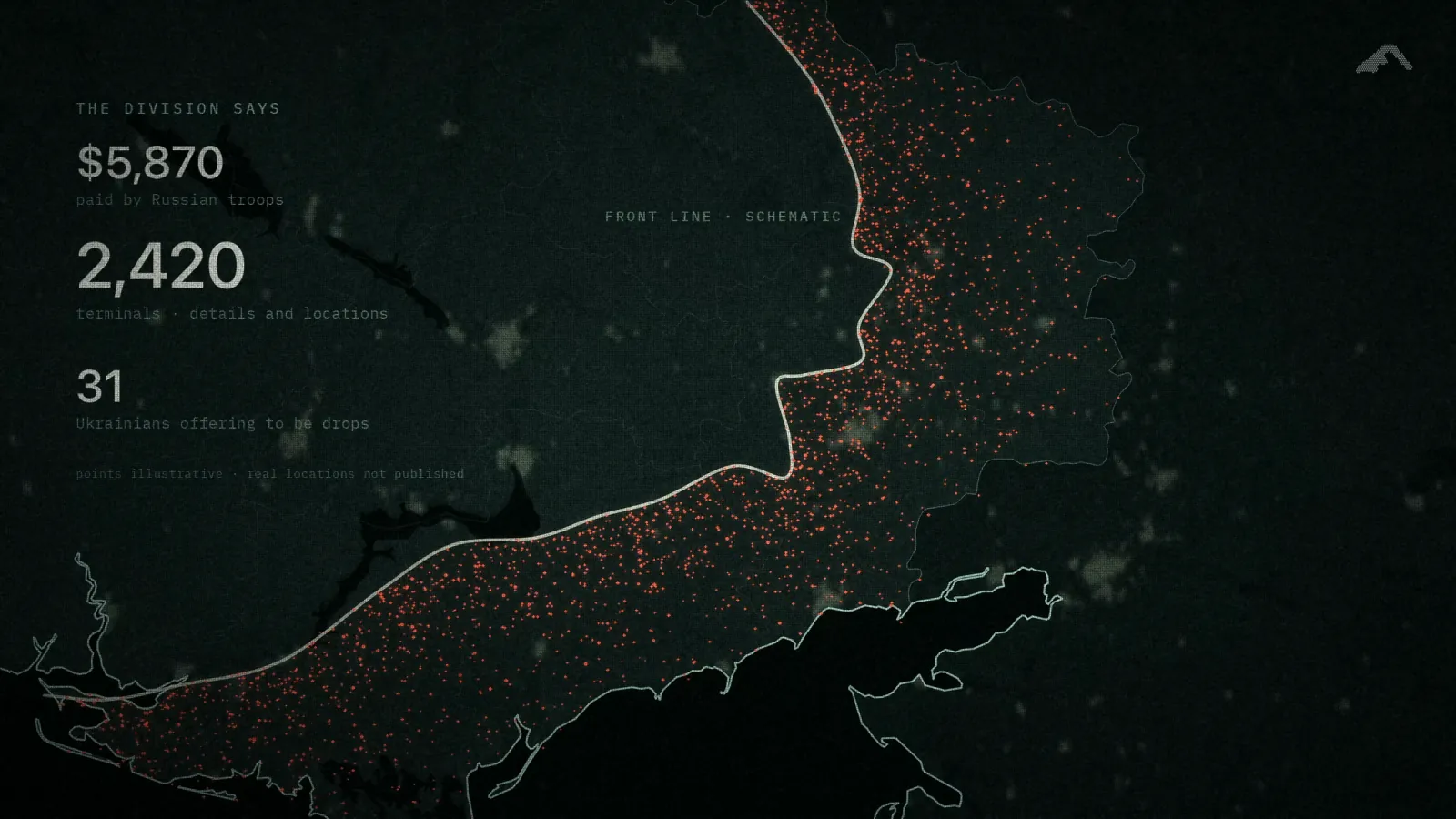
We can’t verify those numbers. What we can see is the trick. The Russian soldiers did exactly what the system asked every Ukrainian to do. Tell us who you are. Tell us where you are. They just told the wrong people.
6 · Another Sky
9:12Russia’s answer was to stop needing the list. On the twenty-fourth of March it launched its own constellation, called Rassvet, Russian for dawn. Sixteen satellites, built by a company called Bureau 1440. Twelve of them reached a stable orbit.16
On the twenty-ninth of April, Russia’s prime minister signed a six-month ban on importing foreign satellite terminals, Starlink included, enforced by customs and the FSB. Moscow had banned the very device its own drone units had come to depend on.17,18
In July, another sixteen went up. By September, according to the Institute for the Study of War and US Space Force tracking, none had reached its planned orbit. One Ukrainian radio expert puts the number Russia needs for constant coverage at 200 or more. It has about a dozen.16
In August, Ukraine struck the factory in Samara that builds Russia’s rockets, and tried to hit the cosmodrome at Plesetsk that launches them.16 Russia, for its part, announced a ground system designed to jam Starlink.4
So a fight over a list became a race for the sky. One side holds a network it can switch on or off, by name. The other is building a sky of its own, sixteen satellites at a time. And in Kyiv, the man who built the list was about to lose his job.
7 · Not on the List
10:41On the fifteenth of July, six months after taking the job, Mykhailo Fedorov was dismissed, in a cabinet shake-up that followed the prime minister’s resignation. No official reason was given.19
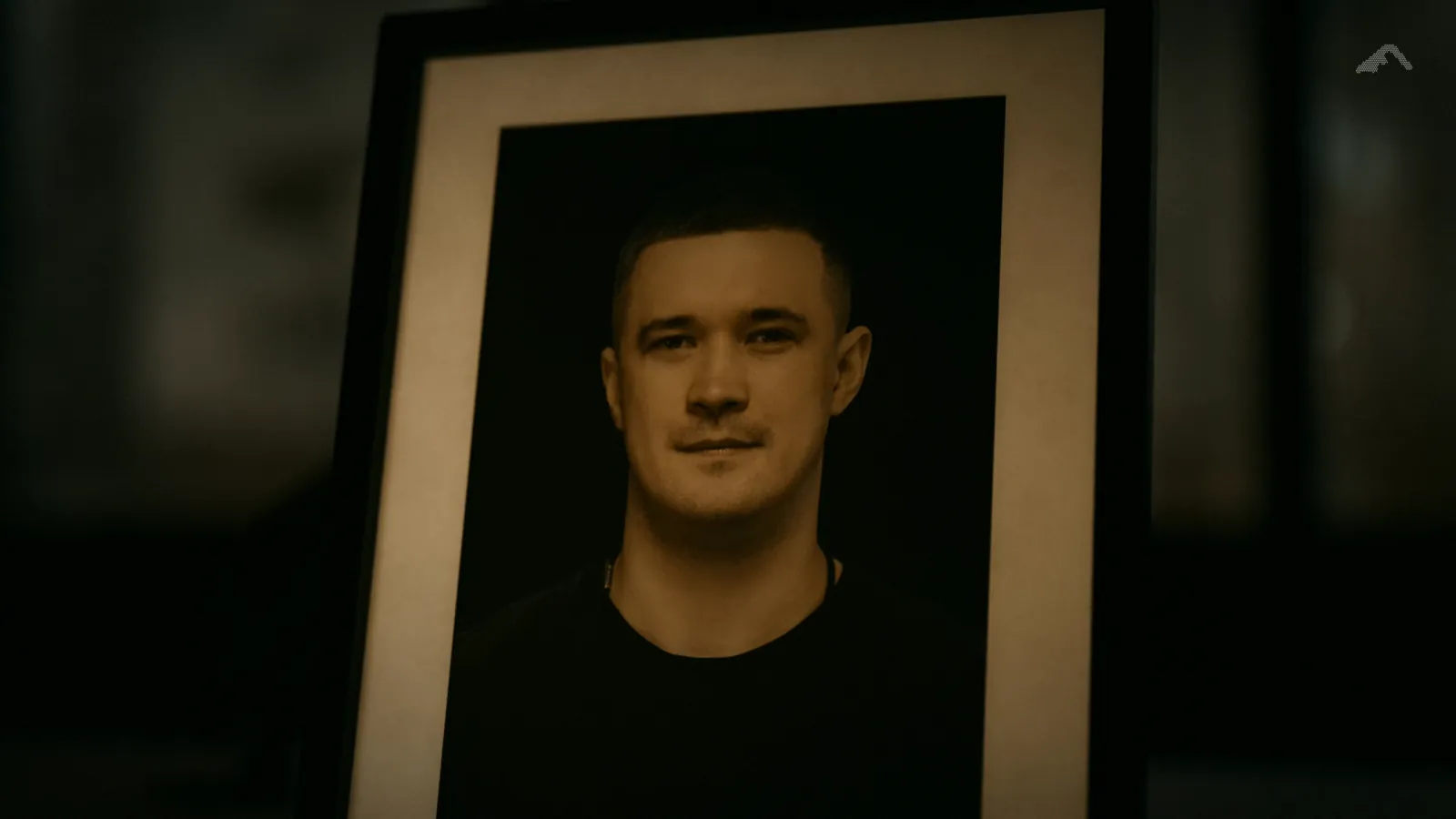
In his farewell post he listed 22 things he had done. Among them: cutting Russia off from Starlink.19 His dismissal drew a backlash at home.20
We found no public sign, as of 8 October 2026, that the list has been switched off. Russia’s six-month import ban is due to lapse about now, in late October, but its parliament has already voted to ban the sale of these terminals outright.17,21 Its own sky is still mostly empty.
In 2022, the words that mattered most in this war were three. Now active. A minister asked, a billionaire said yes, and a country got its internet back. Four years later, the words that mattered most were four. Not on the list.
Switching something on is easy. Deciding who gets to keep it on, and defending that decision against everyone who wants in, is the whole fight.

.jpg)
